
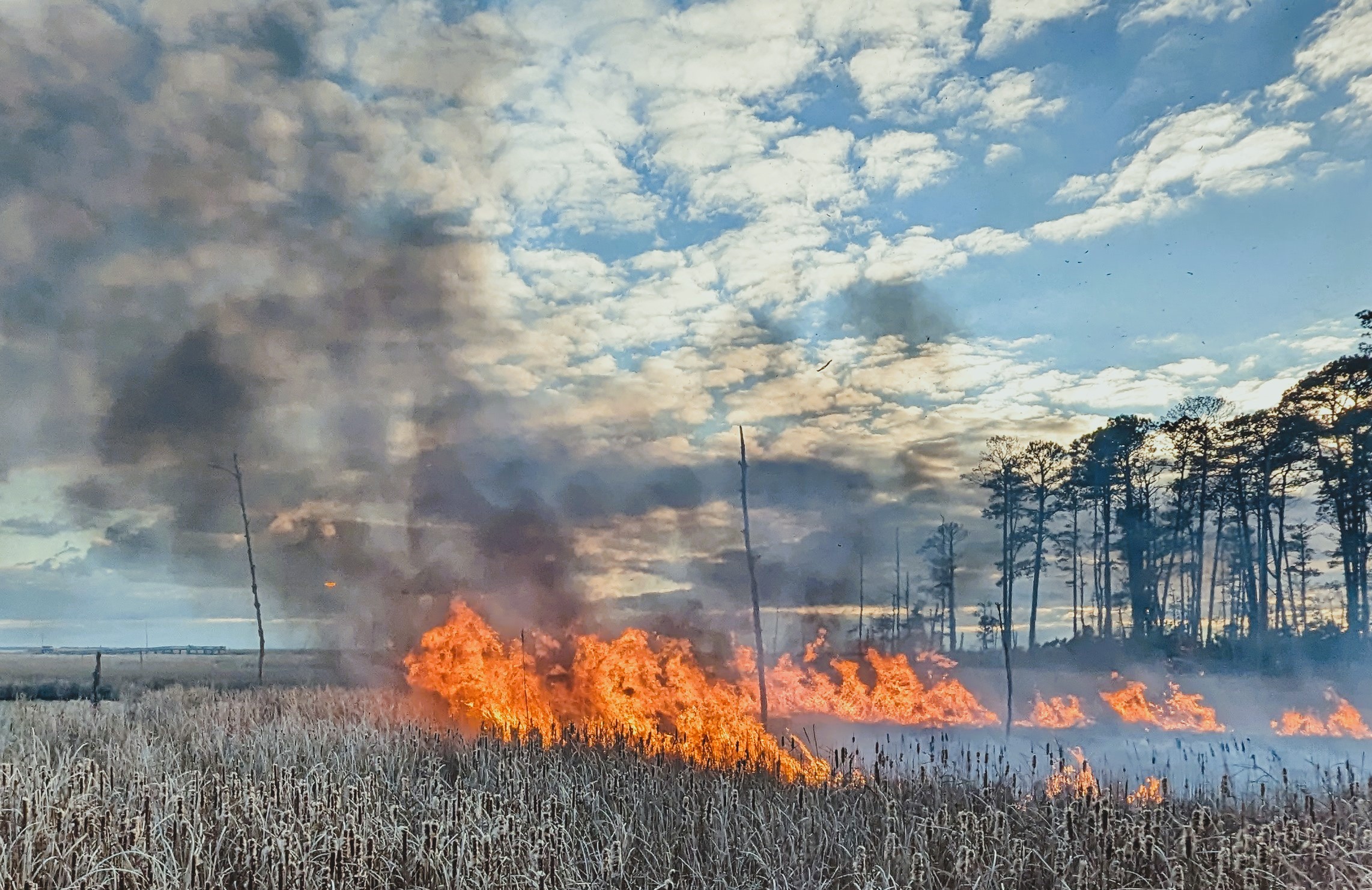
As summer starts and temperatures quickly (and unexpectedly) rise, we must keep our eyes open, as Maryland is not immune to wildfires. As the DNR explains, most wildfires in MD are surface fires were burning happens along the ground, burning dry leaf litter, fallen twigs, and debris underbrush. As many of our forests are composed of hardwood species such as oak, hickory, and maple, wildfires cannot easily penetrate the thick bark of mature trees, however, fuels on the floor can burn and certainly spread. This condition is especially important as “flash droughts”, which are rapid-onset dry spells characterized by high heat, low humidity, and high winds that dry out surface fuels, happen more often as climate changes.
One important characteristic of Maryland’s fragmented landscape is that many people live in the Wildland-Urban Interface (WUI) without knowing it. WUI is where human development meets wildland fuel, and as Marylanders seek the beauty and privacy of living in nature, the risk of wildfires increases. Since 96% of wildfires in MD are caused by human activity, there is a heightened threat to homes and structures as they can become part of the fuel load. When fire happens in these zones, firefighters are forced to change tactics to “structure protection”, where they must divert resources to save individual homes.
We can prevent the spread of wildfires by adopting property management strategies, starting with Maryland’s open-air burning regulations, which allow fires as long as there is a 10-foot wide firebreak and a water source nearby, at least one person to stay until the last spark is out, and burning occurs after 4 pm. Property owners should also create defensible spaces based on distance from infrastructure. From 0-5 feet, all mulch, dead leaves, and firewood must be removed, from 5-30 feet, an intermediate zone must be maintained where mowed, well-watered lawn and shrubs must be at least 10 feet apart. While between 30-100-foot all fuels such as low branches and tall brush must be removed to avoid fire from climbing to the treetops.
Biotic conditions, such as invasive pests killing trees, like the Emerald Ash Borer, or abiotic conditions, such as saltwater intrusion, can also kill off coastal forests, leaving standing dead timber, these are commonly called “ghost forests”. And combined with the rapid spread of highly flammable invasive grasses such as Phragmites, they can create a unique and volatile fuel load that can ignite and easily spread. As such, restoration and management of salt marshes, coastal ecosystems, and heavily attacked forests should also be emphasized to prevent wildfires.
